

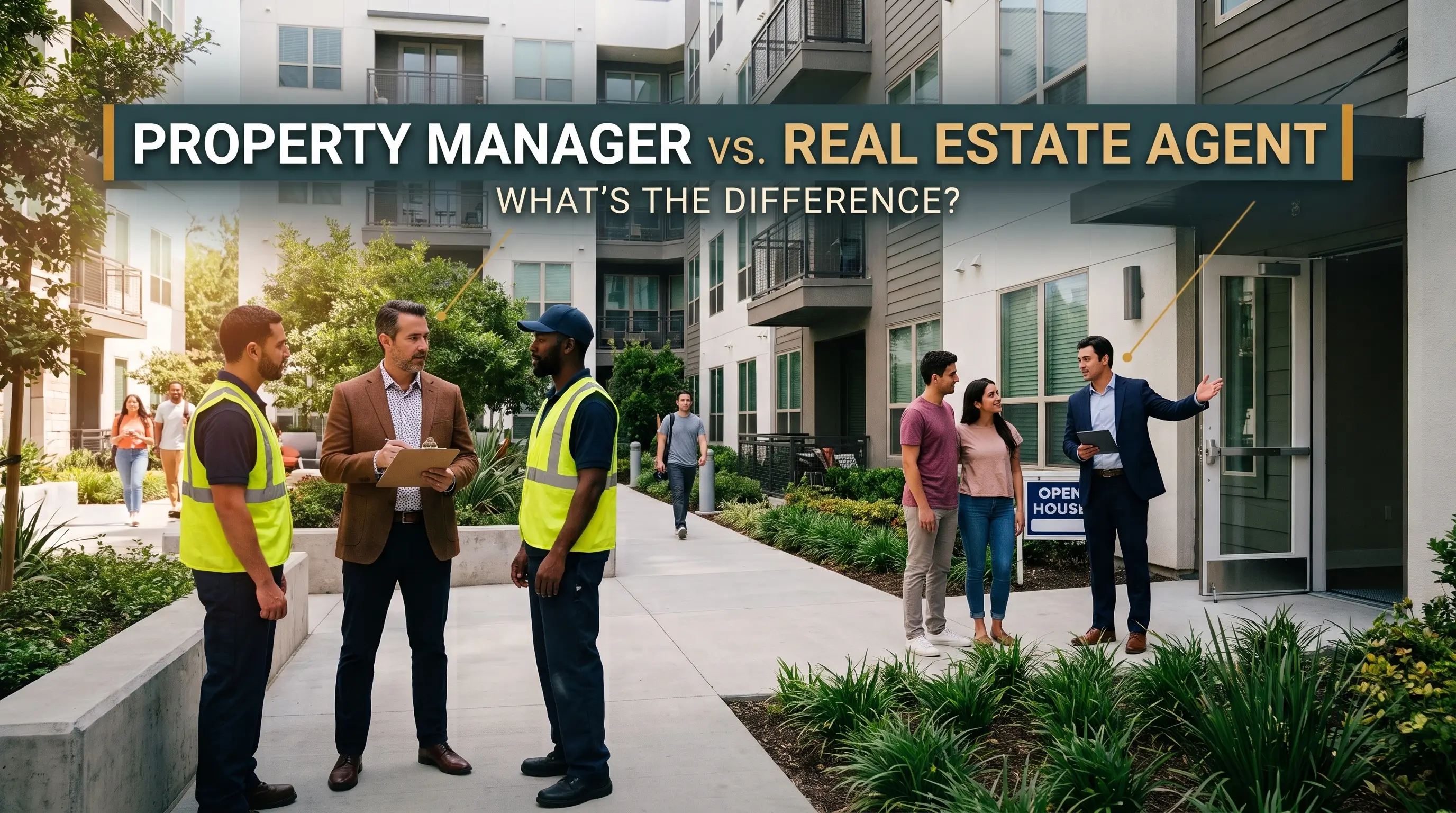
Anyone new to owning rental property in San Jose has likely heard both terms used, sometimes interchangeably. A real estate agent and a property manager both work in the housing industry, but their roles serve very different purposes. Confusing the two can lead an owner to hire the wrong professional for the job, whether that means missing out on ongoing support for a rental unit or overpaying an agent for services outside their expertise.
Understanding the distinction matters most when an owner is deciding how to manage a rental property long-term, or when they are trying to figure out who to call for a specific need, from finding a qualified tenant to listing a property for sale. This blog breaks down what separates a property manager from a real estate agent, and how San Jose owners can decide which one fits their situation.
Key Takeaways
A real estate agent focuses on buying and selling property, while a property manager focuses on the day-to-day operation of a rental.
Property managers handle tenant relations, rent collection, and maintenance, tasks that fall outside a typical agent's role.
Some professionals hold licenses and experience in both areas, but the services they provide under each role remain distinct.
Choosing the right professional depends on whether an owner needs help acquiring property or managing one they already own.
What a Real Estate Agent Does
A real estate agent is licensed to represent buyers or sellers in a property transaction. Their expertise centers on pricing a home accurately, marketing it to potential buyers, negotiating offers, and guiding a client through closing. For an investor purchasing a multi-family building in San Jose, an agent is the right person to help identify listings, tour properties, and finalize a purchase agreement.
Once the transaction closes, however, an agent's involvement typically ends. Agents are not usually equipped to handle the ongoing responsibilities that come with owning a rental property, such as screening tenants, collecting rent, or coordinating repairs. Their compensation model also reflects this, since agents generally earn a commission tied to a sale rather than a recurring fee for continuous service.
What a Property Manager Does
A property manager steps in where an agent's role ends. Their job is to oversee the daily operations of a rental property on behalf of the owner. This includes marketing vacant units, screening applicants, collecting rent, handling lease renewals, and responding to tenant concerns as they come up.
Maintenance is one of the most visible parts of this role. A rental property in San Jose faces constant wear from tenant turnover, weather, and everyday use, and owners who try to manage repairs on their own often find themselves scrambling to line up contractors on short notice. A property manager who already has a dependable maintenance team in place can respond to issues quickly, keeping tenants satisfied and protecting the condition of the building over time.
Property managers also take on responsibilities that go beyond what most people picture when they think of managing a rental. Financial oversight is a major piece of the job, since owners need accurate records of income and expenses to understand how a property is actually performing. A property manager who provides transparent financial reporting gives owners the visibility they need to make decisions about rent increases, upgrades, or long-term investment strategy without having to track every transaction themselves.
Licensing and Overlap between the Two Roles
In California, both property managers and real estate agents typically need a real estate license to legally operate, which is part of why the two roles sometimes get confused. Some professionals hold licenses in both areas and offer a combination of services, helping an investor purchase a property and then managing it once the deal closes.
Even so, the day-to-day work involved in each role rarely overlaps. An agent's expertise lies in transactions and market timing, while a property manager's expertise lies in operations, tenant relationships, and property upkeep. An owner who hires someone for one purpose shouldn't assume they are equipped to handle the other, since the skill sets and daily responsibilities are genuinely different.
Which One Does a San Jose Owner Actually Need?
The right choice depends on where an owner is in their investment journey. Someone looking to buy a rental property, add units to a portfolio, or sell an existing building needs a real estate agent who understands the local market and can negotiate favorable terms.
Once that property is acquired, though, the ongoing work of running it profitably falls to a property manager. Owners who try to handle both buying decisions and daily operations on their own often find that one side suffers, whether that means missed opportunities in the market or neglected maintenance and tenant issues at the property. Bringing in the right professional for each stage tends to produce better outcomes than expecting one person to cover both roles equally well.
FAQs
Can the same person be both my real estate agent and property manager?
It is possible if that person holds the appropriate licensing and experience in both areas, but it is worth confirming they have a genuine track record managing rental properties, not just closing sales.
Do property managers help with buying or selling a rental property?
Generally no. Property management companies focus on operating a property you already own, so a real estate agent is still the right resource for a purchase or sale.
Is it more expensive to hire a property manager than to self-manage?
There is a management fee involved, but many owners find it offsets the cost of vacancies, late rent, and maintenance issues that come from handling everything alone.
When should I bring in a property manager instead of managing the rental myself?
If tenant turnover, maintenance requests, or financial tracking are taking up more time than an owner wants to spend, or the portfolio is growing, that's usually a sign it's time to bring in professional support.
Partner with Fireside to Manage Your San Jose Rental Property
Knowing the difference between a real estate agent and a property manager helps San Jose owners get the right support at the right time. While an agent can help with buying or selling, it takes a dedicated property manager to handle the daily work of keeping a rental profitable, from tenant relations to maintenance to financial reporting.
Fireside Property Management gives San Jose owners that ongoing support, so their investment runs smoothly long after the purchase is complete. If you're ready to hand off the daily responsibilities of managing your rental property, reach out to Fireside to learn how our team can help.
